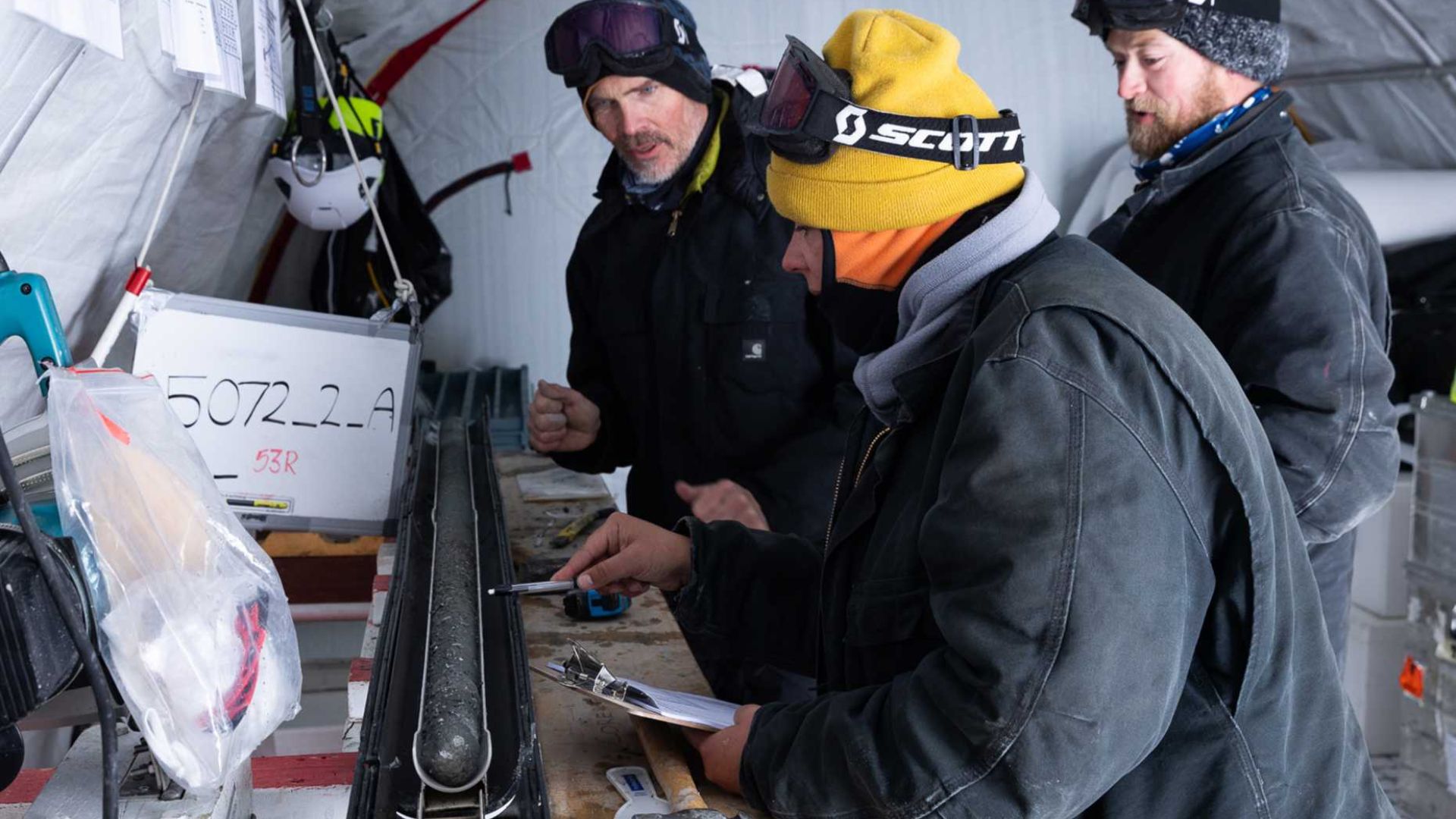
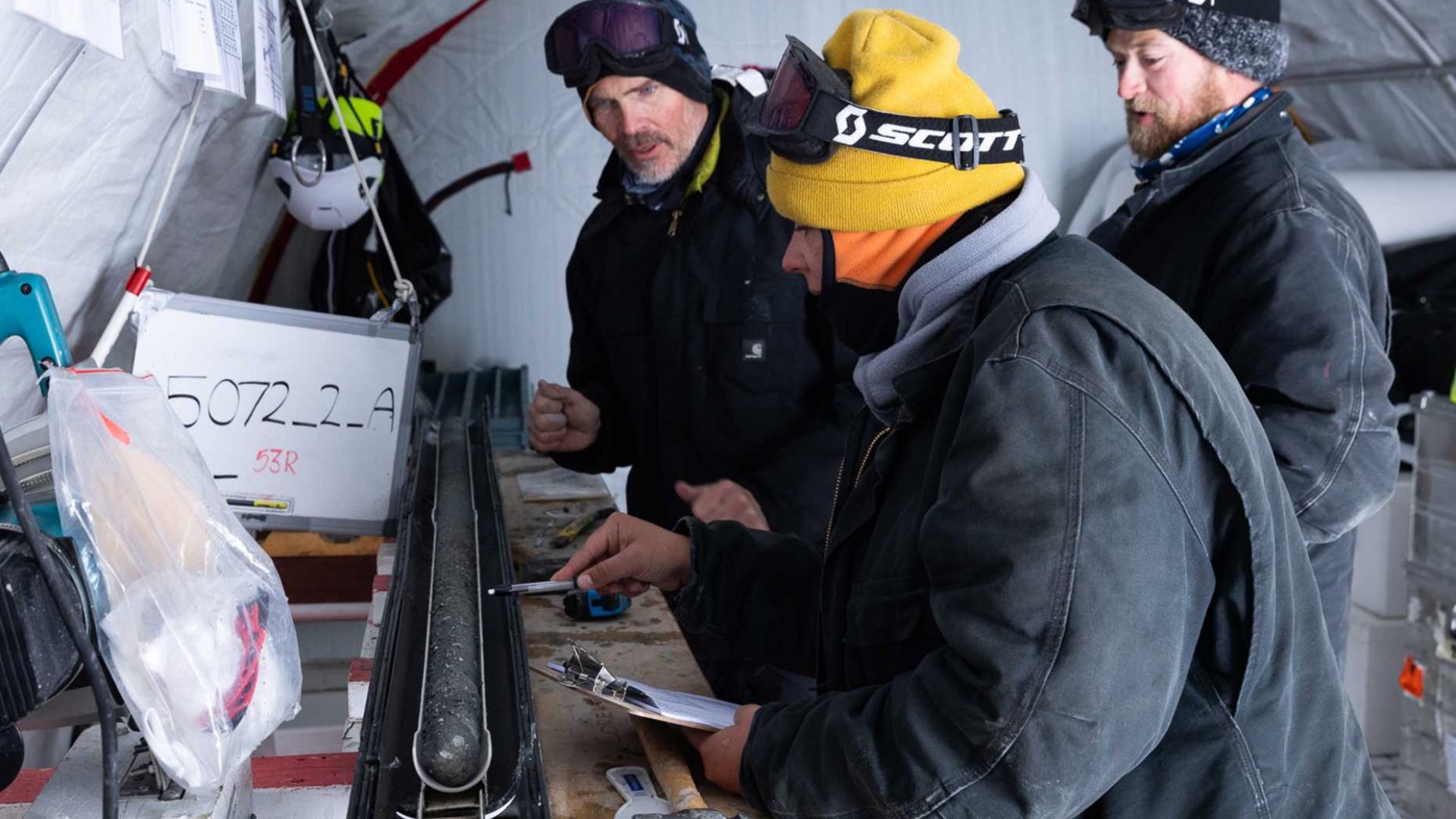
An international research team has achieved a scientific milestone by recovering a 228-meter-long sediment core from beneath the West Antarctic Ice Sheet.
Drilled at Crary Ice Rise, this record-breaking core provides a geological time machine of roughly 23 million years.
The sediment core, composed of layers of mud and rock, could offer insights into how Antarctica reacts to rising global temperatures.
“This record will give us critical insights about how the West Antarctic Ice Sheet and Ross Ice Shelf are likely to respond to temperatures above 2°C. Initial indications are that the layers of sediment in the core span the past 23 million years, including time periods when Earth’s global average temperatures were significantly higher than 2°C above pre-industrial,” said Huw Horgan, co-chief scientist of the SWAIS2C project.
Antarctica’s time machine
The West Antarctic Ice Sheet is a global floodgate. If it completely melts, global sea levels will rise by four to five meters. That is enough to submerge major portions of New York, Mumbai, and London.
Previously, climate models relied on peripheral data from the open ocean or satellite imagery.
This new, direct evidence from beneath the ice provides the missing link for determining exactly how and when this ice sheet might collapse.
In particular, the ice core provided direct geological evidence for the first time of how the West Antarctic Ice Sheet’s margin shifted during ancient warm periods.
Researchers extracted the core in three-meter segments, uncovering a diverse geological timeline reflected in the changing composition of the seabed.
The layers transitioned from fine-grained muds to firm gravels containing large, embedded rocks, pointing to shifts in the local environment over millions of years.
This physical variety in the sediment provides a fingerprint of the region’s history, moving between periods of quiet deep-water deposition and more turbulent glacial activity.
“We saw a lot of variability. Some of the sediment was typical of deposits that occur under an ice sheet like we have at Crary Ice Rise today. But we also saw material that’s more typical of an open ocean, an ice shelf floating over ocean, or an ice-shelf margin with icebergs calving off,” said Molly Patterson, professor of Geology at Binghamton University, USA.
Predicting future
The presence of light-dependent marine fossils and shell fragments within the sediment proves that this now-frozen region was once an ice-free open ocean.
While scientists had previously suspected that the Ross Ice Shelf had retreated or collapsed, these physical remains provide strong evidence of such events.
The SWAIS2C team is now focused on pinpointing the exact timing and environmental triggers of these collapses to determine how close the West Antarctic Ice Sheet is to a similar retreat today.
It took three years of attempts. Earlier missions were defeated by the brutal Antarctic environment and technical glitches.
The operation required melting a 523-meter-deep hole with a hot-water drill before deploying more than 1,300 meters of specialized piping to reach the seafloor.
“To our knowledge, the longest sediment cores previously drilled under an ice sheet are less than ten metres. We exceeded our target of 200 metres. This is Antarctic frontier science,” said Patterson.
The goal is clarity. We know the world is warming, but we don’t know if we are walking toward a puddle or a tidal wave. This ancient mud might finally give the world the timeline we need to prepare.